TL;DR
- ChatGPT cites pages it finds through live search, so classic SEO is the entry ticket.
- Let OAI-SearchBot crawl your site, or you can't appear in ChatGPT search answers.
- Pages that state facts plainly, with numbers and sources, are the ones that get quoted.
- Mentions on sites ChatGPT already trusts matter as much as your own pages.
- Track a fixed list of prompts every month to see whether it's working.
Your buyers now ask ChatGPT which tools to shortlist before they ever open Google. If your brand isn't in that answer, you're not on the list, however well you rank.
Getting cited isn't luck. ChatGPT reads the web, picks a handful of sources and quotes the clearest ones. Here's how that works and what to change so you're one of those sources, the same work I do in AI search visibility projects.
How ChatGPT picks the sources it cites
ChatGPT answers in two ways: from what it learned in training, which you can't change quickly, and from a live web search, which you can. The linked sources under an answer come from the search.
It searches, then summarises
When a question needs specific or recent information, ChatGPT runs a search, reads a few results and writes an answer with links. OpenAI says ChatGPT search uses third-party search providers plus content from its partners. Its earlier browsing feature was called Browse with Bing.
So the pages it can cite are, first, pages that rank in a regular search index. From those, it quotes the ones that answer the question most directly.
Training data shapes what it already believes
Training decides which brands ChatGPT already links to your category. That builds up over years of reviews, articles and forum threads, so you can move it, slowly, by being mentioned where those models learn.
ChatGPT SEO starts with being crawlable
ChatGPT SEO isn't a separate discipline. It's classic SEO plus a few rules for AI crawlers. OpenAI runs three, and each does a different job:
- OAI-SearchBot finds pages to show in ChatGPT search answers.
- GPTBot collects content that may be used to train models.
- ChatGPT-User visits a page when someone asks ChatGPT to open it.
OpenAI's documentation says sites that block OAI-SearchBot won't appear in ChatGPT search answers. Blocking GPTBot only opts you out of training. Plenty of B2B sites block all three by accident, through a security plugin or a firewall rule.
How to optimize for ChatGPT search in 6 steps
1Allow OAI-SearchBot in robots.txt
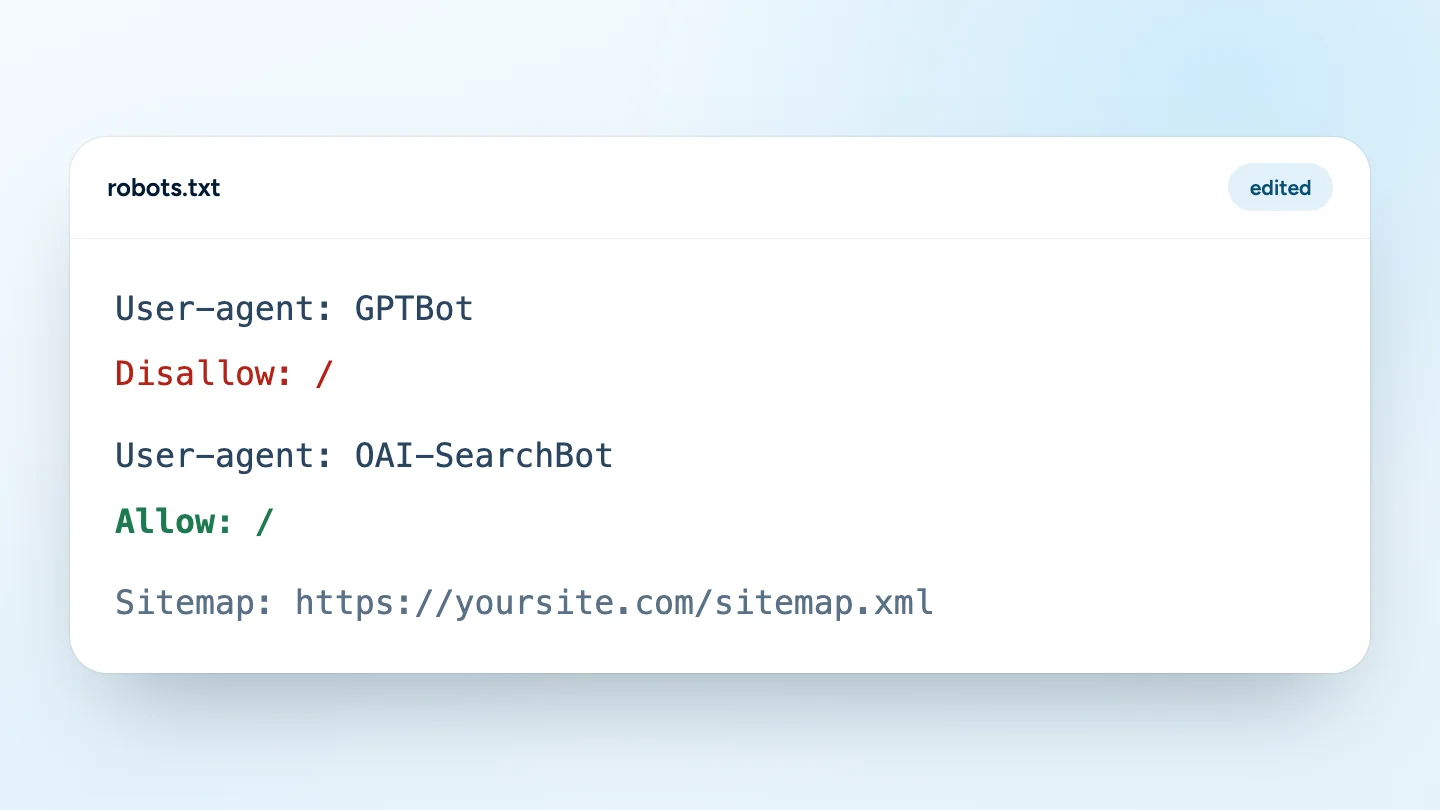
Open yoursite.com/robots.txt and look for rules that block OAI-SearchBot, or block every bot. Allow it on every page you want quoted. Then check your CDN and firewall, where bot protection often blocks it too.
Want to stay out of model training? You can block GPTBot and still allow OAI-SearchBot. A quick pass through a technical SEO checklist catches the rest.
2Rank in Bing as well as Google
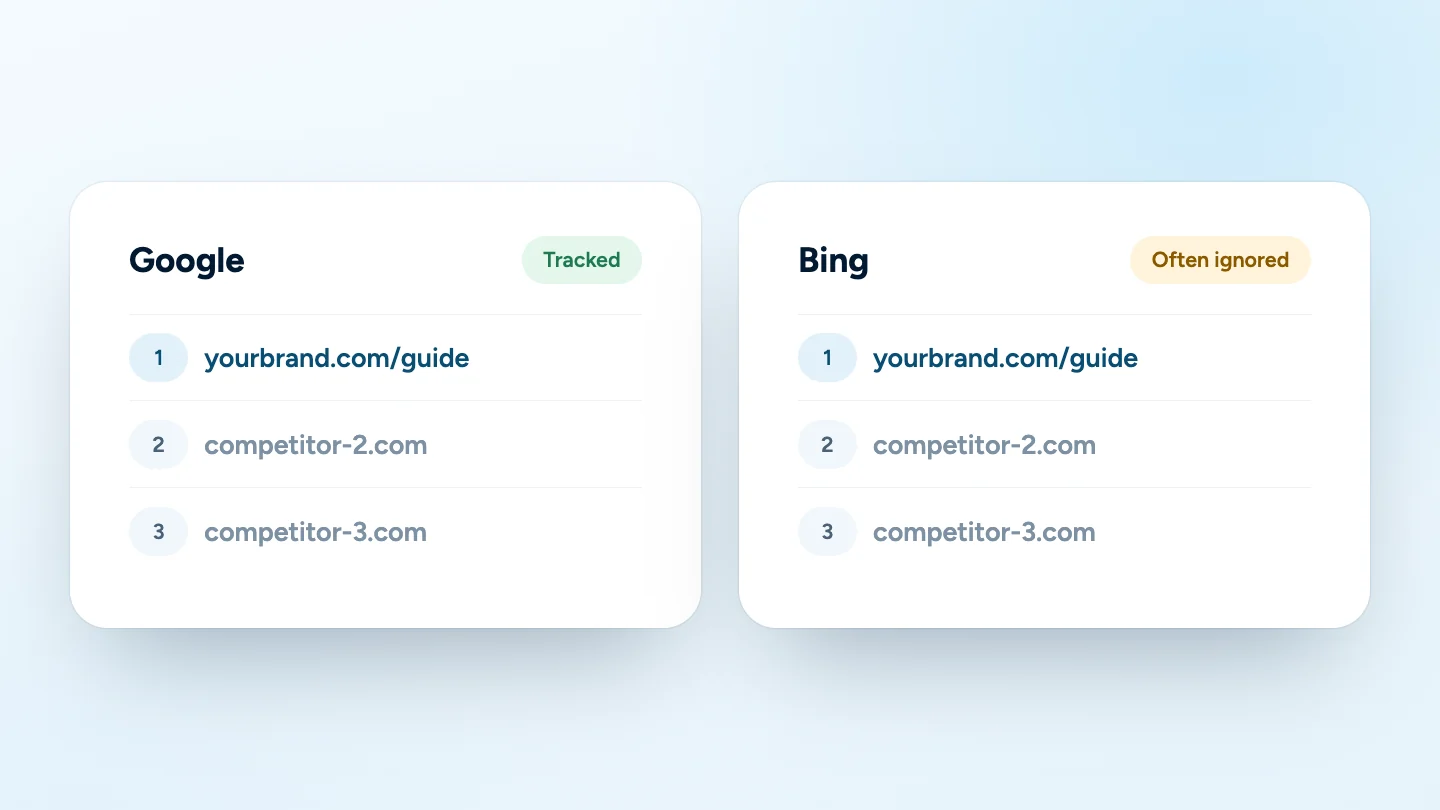
Because ChatGPT leans on third-party search results, a page that ranks nowhere rarely gets cited. Most B2B teams watch Google closely and ignore Bing completely.
Verify your site in Bing Webmaster Tools, submit your sitemap and turn on IndexNow so new pages are picked up within days. It takes an afternoon.
3Answer the question in the first two lines
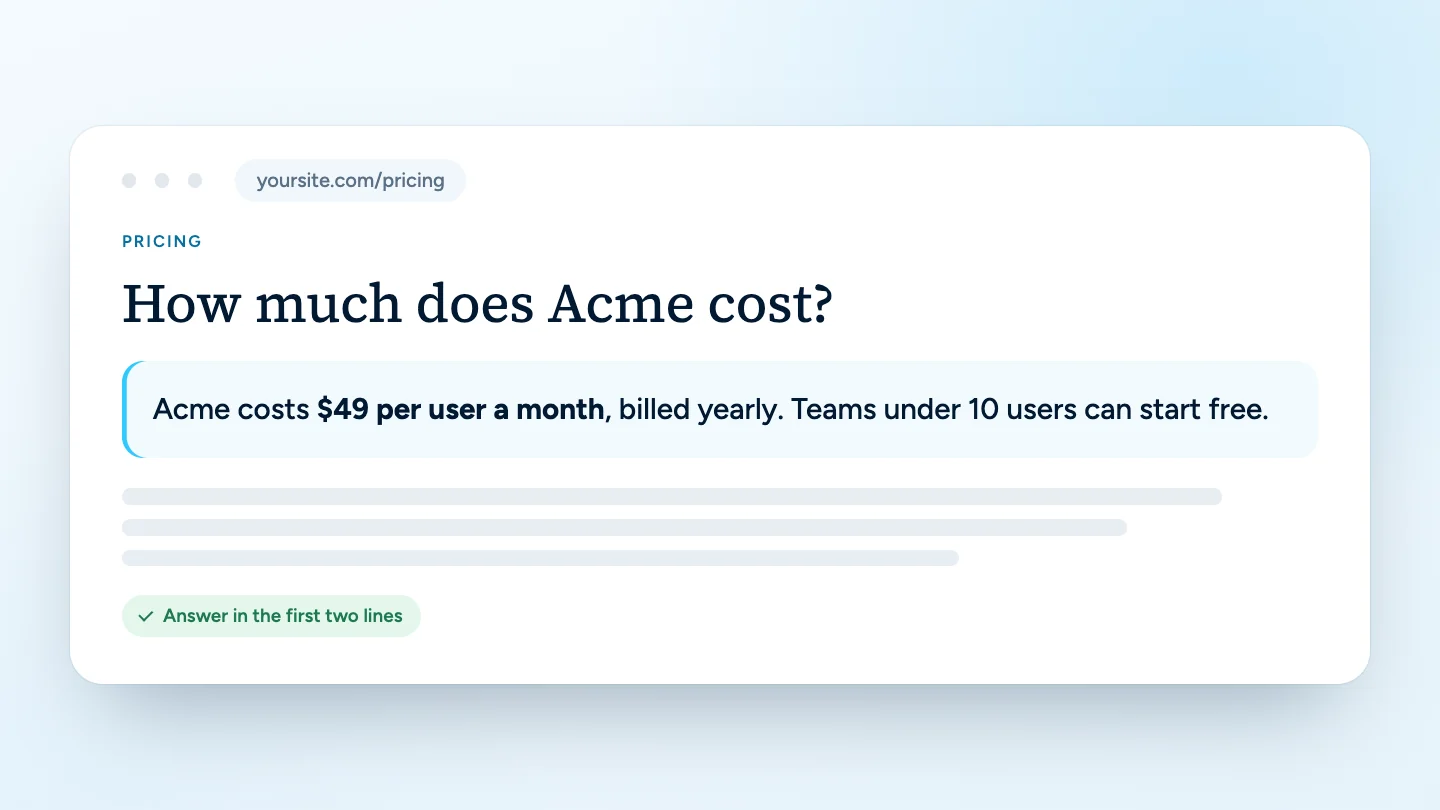
AI answers lift short passages. Put the direct answer at the top of the page or section, in one or two plain sentences, then explain.
Write headings as the questions buyers ask: "How much does X cost?", "X vs Y for mid-size teams". A heading that matches the prompt makes the passage below it easy to quote.
4Add numbers, sources and quotes
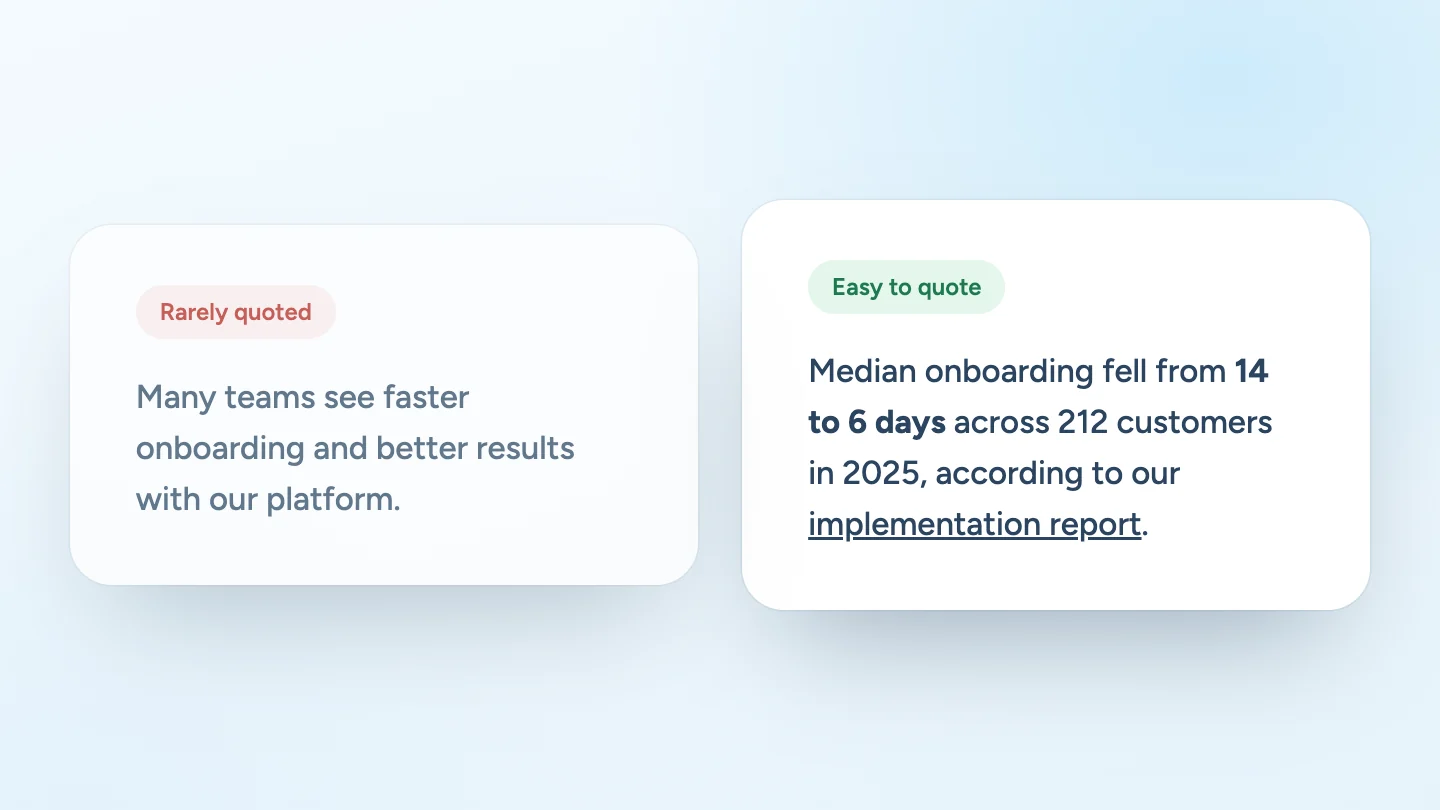
A study from Princeton and partners, GEO: Generative Engine Optimization (KDD 2024), tested page edits on simulated AI search engines. Adding statistics, citations and quotations raised visibility in answers by up to 40% on their benchmark.
It's a lab result, not a promise. It matches what I see, though: pages with specific, sourced facts get quoted; vague ones don't.
5Publish honest comparison pages
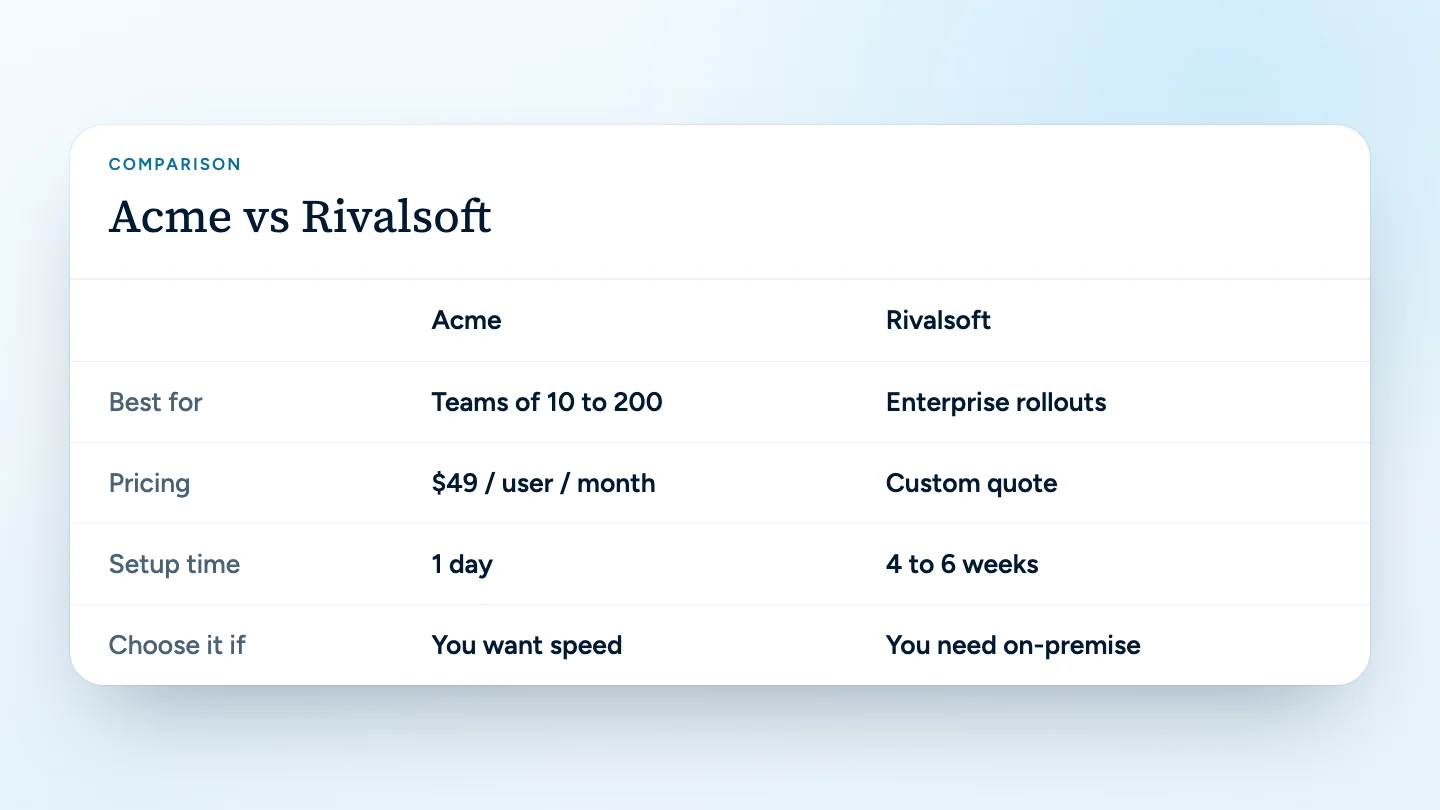
Buyers ask ChatGPT for shortlists: "best SOC 2 tools for startups", "X alternatives". It cites pages that already compare options, with clear criteria and real trade-offs.
Write your own comparisons, including where a competitor fits better. Honest pages get quoted; pure sales pages get skipped.
6Get mentioned on sites ChatGPT trusts
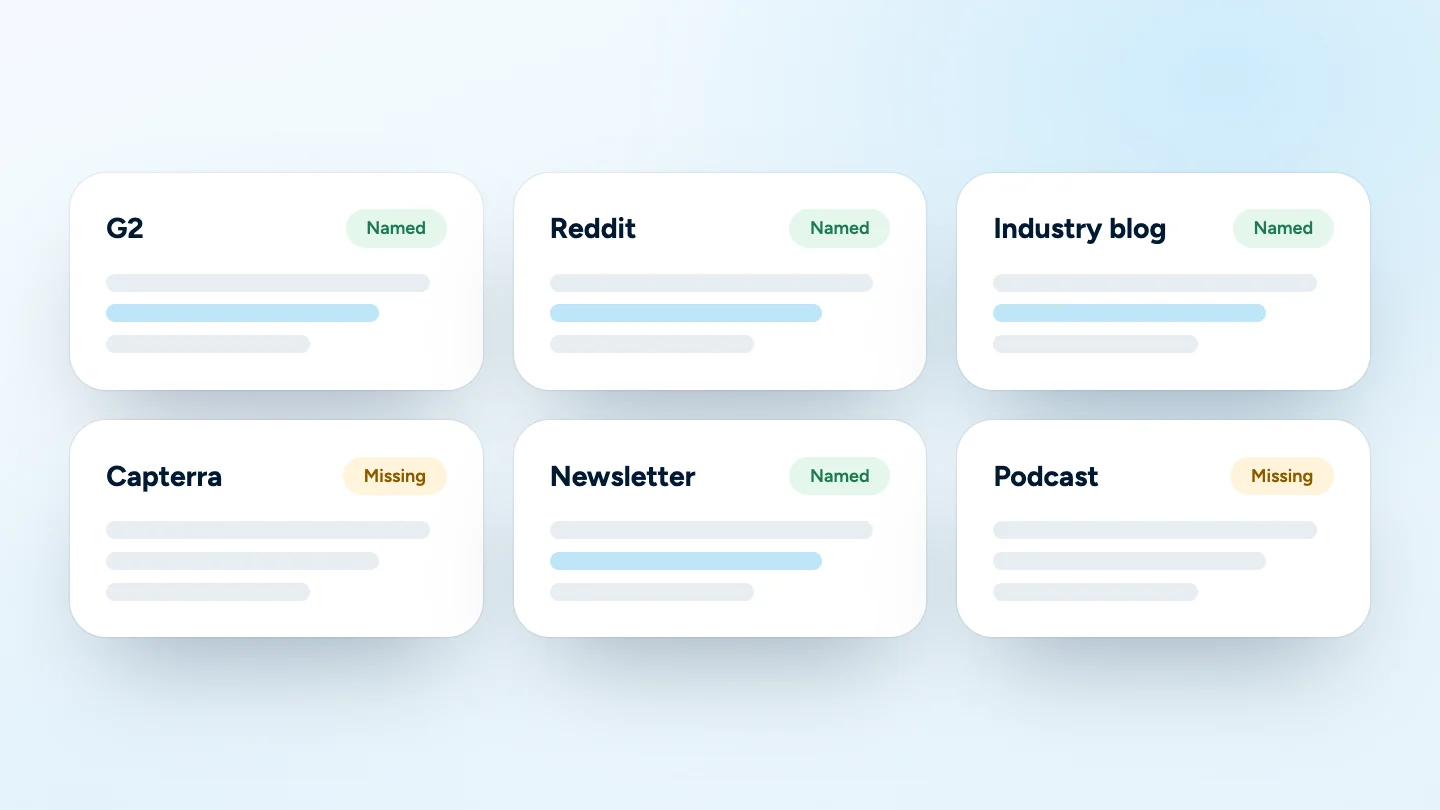
ChatGPT often cites review sites, industry publications and community threads instead of vendor pages. Being named there puts you in answers even when your own page isn't the source.
List where your category is discussed and earn a real presence in the few that keep showing up as sources. It's the same trust Google calls E-E-A-T.
SEO for ChatGPT vs classic SEO
SEO for ChatGPT rests on the same foundations: crawlable pages, a strong index presence and links from trusted sites. What changes is the prize. In Google you win a click. In ChatGPT you win a mention, often with no click at all.
That changes the writing. Clear, quotable statements beat long intros, and consistency matters: if your pricing page, G2 profile and LinkedIn describe you differently, answers blur. It's the core of generative engine optimization.
What doesn't change: thin content doesn't get cited, and no file or tag guarantees a mention. llms.txt helps AI tools read your site, but it works best alongside content worth citing. For the short version, see how to rank in ChatGPT.
Keep your facts consistent everywhere
AI answers stitch together what several sources say about you. If your site says "for mid-market" and your G2 profile says "for startups", the answer will hedge or pick one.
Write down the five facts you want repeated: who you're for, what you replace, pricing model, key integrations and one proof point. Then make your homepage, product pages, review profiles and LinkedIn say the same thing, in the same words.
Google's AI answers work much the same way, so this also covers how to rank in AI Overviews.
Use a ChatGPT visibility tracker, or a spreadsheet
You can't see ChatGPT impressions the way you see Google's. So pick 20 to 30 prompts your buyers would really ask and check them every month:
- Are you mentioned? By name, in the answer text.
- Are you cited? Linked as a source, and which page.
- Who shows up instead? The competitors and sites cited.
A ChatGPT visibility tracker such as Peec AI or Profound runs this across models for you, but a spreadsheet is fine to start. And ask new leads where they heard of you: "ChatGPT" is becoming a common answer.
ChatGPT citation FAQs
Can you pay to get cited by ChatGPT?
No. There's no paid placement in ChatGPT's answers today. Citations come from the pages its search finds and judges most useful for the question.
How long does it take to get cited by ChatGPT?
Pages that already rank can start appearing within weeks once crawling is fixed. Building mentions on third-party sites usually takes a few months.
Does ChatGPT use Google or Bing search results?
OpenAI says ChatGPT search uses third-party search providers and partner content. Its earlier browsing feature ran on Bing, so ranking in Bing is a sensible baseline.
Does blocking GPTBot stop ChatGPT citing my site?
No. GPTBot collects training data. Citations depend on OAI-SearchBot, which you can allow separately in your robots.txt file.

I help B2B and B2C companies grow non-branded traffic from Google and AI answers: technical SEO, programmatic SEO and content strategy, done hands-on. Based in Mendoza, Argentina, working with teams in the US and LATAM.
Connect on LinkedIn